

God Hates Self Pity
God hates self-pity. Here’s the plain truth, because it pulls your heart away from trust, gratitude, and obedience. Still, this isn’t the same as normal grief. Tears can honor the Living God. Asking for help can honor Him too. The problem starts when sorrow turns inward and refuses faith.
Why is self-pity serious?
The Bible teaches that God hates murmuring and complaining because it reflects discontent, distrust, and rebellion against Him. Murmuring, defined as grumbling or complaining in a sullen or half-suppressed manner, is consistently condemned in Scripture.
Spiritual Consequences
Complaining and murmuring are not merely harmless expressions of frustration.
They can: Deteriorate faith by focusing on problems rather than trusting God’s plan.
Give Satan an opportunity to sow doubt and discontent.
Damage testimony by creating a negative atmosphere that repels others from God.
Lead to personal stress and dissatisfaction, undermining joy and peace.
Self-pity meaning in the Bible, and why it is not the same as grief

Self-pity means you turn your pain into a throne for “me.” You keep replaying wrongs. You demand comfort. You excuse unbelief because you feel hurt. In time, self-pity starts to sound like wisdom, but it trains you to stare at yourself.
Grief looks different. Godly grief tells the truth about loss, then brings that loss to the Living God. Lament says, “This hurts,” while still reaching for Him. You can cry and still trust. You can feel weak and still obey.
Godly sorrow moves you toward repentance and life. Worldly sorrow circles the wound until it kills hope and obedience (learn the difference in godly sorrow versus condemnation).
For a broader overview, you can also compare your thinking with this resource on what the Bible says about self-pity.
How self-pity twists your focus from God to "me"
Self-pity builds an inward spiral. You magnify pain, then minimize grace. After that, you measure life by what feels fair. Your conscience gets dull because your feelings feel “right.”
Philippians 2:14 (KJV): “Do all things without murmurings and disputings.”
The Living God commands a complaint-free posture. He doesn’t deny pain. He calls you to act in faith while pain talks loud.
Think about family conflict. One tense conversation can turn into hours of “They always do this to me.” Money stress works the same way. A bill arrives, and you start narrating a hopeless story. Yet faith says, “God still reigns, and I still obey.”
When self-pity digs in, it often becomes a mental fortress. If you want help breaking those patterns, read about pulling down mental strongholds.
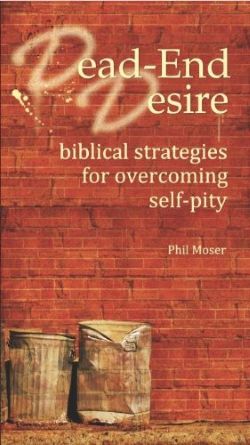
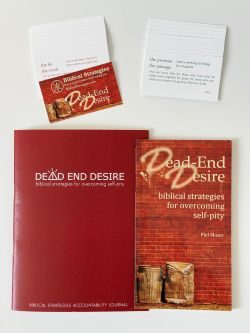
Dead End Desire: Book, Scripture Memory Pack and Study Guide
Dead‑End Desire: Biblical Strategies for Overcoming Self‑Pity is a sharp, Scripture‑saturated wake‑up call for anyone tired of living in the emotional quicksand of “why me.” Phil Moser exposes self‑pity for what it really is—a deceptive desire that leads nowhere—and shows you how to break its grip through clear biblical truth, practical steps, and real‑life application.
Pair it with the Dead‑End Desire Book, Scripture Memory Pack, and Study Guide, and you get a complete transformation toolkit: the book to confront the lies, the memory cards to retrain your thinking with God’s Word, and the study guide to walk you step‑by‑step into lasting freedom. Together, these resources give you everything you need to silence self‑pity, strengthen your spiritual resilience, and walk boldly in the identity Christ has already secured for you. Purchase book only or combo.
A quick test, are you grieving, or are you feeding self-pity?
Use this gentle test. Answer honestly, not dramatically.
Do you talk to the Living God, or only to yourself?
Do you seek wise help, or do you isolate?
Do you confess sin quickly, or do you justify it?
Do you keep serving others, even in small ways?
Do you feel thankful for any mercy today?
Do you blame God or people for your attitude?
Do you expect special treatment because you hurt?
Grief that can honor God often shows up as honest prayer and patient endurance. It may include tears, but it still reaches outward. Self-pity often shows up as blame and entitlement. It also pushes you into isolation, where sin grows fast.
If your pain makes you pray, you’re grieving. If your pain makes you accuse, you’re drifting into self-pity.
Why God hates self-pity, what it produces, and what it says about His character

God hates self-pity because it doesn’t stay “private.” It produces murmuring, envy, bitterness, and spiritual paralysis. It tempts you to believe the Living God deals unfairly with you. Even worse, it makes your suffering the center, not His glory.
You can see this pattern in Scripture. Elijah slumped under despair. Jonah pouted when God showed mercy. Both men faced real stress, yet self-focus bent their vision. Self-pity tells you, “Your story ends here.” The Living God says, “Get up. Obey. Trust Me.”
Self-pity also insults God’s character. It suggests He mismanaged your life. It treats His wisdom like an enemy. It judges His timing as careless. At the same time, God never asks you to fake strength. He asks for truth, then surrender.
In February 2026, you still hear faithful teachers warn about this for a reason. Self-pity feels like relief, but it lies. It frames you as the main character and the Living God as a supporting role. That is upside down.
For a helpful perspective on fighting back, consider how to wage war on self-pity.
Self-pity turns into murmuring, and God takes murmuring seriously
1 Corinthians 10:10 (KJV): “Neither murmur ye, as some of them also murmured, and were destroyed of the destroyer.”
Israel’s murmuring invited judgment, and God preserved it as a warning to you. Murmuring can sound spiritual, yet it still accuses God.
You might say, “I’m just being real.” However, your words teach your heart what to believe. Self-pity also spreads fast. Your tone affects your spouse, your kids, your friends, and your church family.
Self-pity blocks thanksgiving and keeps you stuck in a smaller story
1 Thessalonians 5:18 (KJV): “In every thing give thanks: for this is the will of God in Christ Jesus concerning you.”
God’s will calls you to gratitude in every situation. Pain isn’t good, but the Living God stays good.
Thanksgiving re-centers you. It pulls your eyes off “I deserve better” and back to “Jesus saved me.” It restores your sense of proportion. You remember mercy, not just misery. In that place, you can say one clean truth: Shalom restores what is broken, because the Living God restores, not because life feels soft.
If you need a reminder that God acts in ordinary days, reflect on God’s influence on daily life.
How to overcome self-pity and walk in victory in the Living Jesus

You don’t beat self-pity with willpower alone. You beat it with repentance, truth, and action. Start small, but start today. The goal isn’t a tougher personality. The goal is obedience that honors the Living Jesus.
First, call self-pity what it is. Don’t dress it up as sensitivity. Don’t excuse it as “my trauma made me.” Bring your heart into the light, because darkness loves secrecy.
James 4:7 (KJV): “Submit yourselves therefore to God. Resist the devil, and he will flee from you.”
You submit to the Living God first. Then you resist the devil’s pull toward bitterness and self-focus.
Here’s a practical replacement. Speak one truth out loud: “Living Jesus, You are Lord over my emotions today.” Then take one action: text encouragement to someone, serve a need at home, or write down three mercies you didn’t earn (if you want help with spoken truth, use Christian affirmations for stronger faith).
Confess it as sin, then replace the script with truth
Confession turns the key. You stop defending yourself. You stop hiding behind pain. After that, you can move forward clean.
Pray this, and mean it:
Living Jesus, I confess my self-pity as sin. I reject blame and entitlement. Please fill me with faith and lead me into obedience today.
Your next right step can look simple. Wash the dishes without grumbling. Apologize for your tone. Show up to church even when you feel low. Each act tells your flesh, “You don’t rule me.”
If you struggle with half-hearted devotion, rebuild your habits with daily steps for total devotion.
Fix your eyes on what God promised, even when feelings protest
Proverbs 3:5 (KJV): “Trust in the Lord with all thine heart; and lean not unto thine own understanding.”
You trust the Living God fully. You stop making your understanding the judge of His goodness.
Try three quick habits this week. Write a short thanksgiving list each morning. Limit complaint talk, especially online or at work. Turn pain into a clear request in prayer, then leave it with God.
Self-pity says, “I can’t move.” Faith says,”I can do all things through him who strengthens me.”
Conclusion
Self-pity feels safe because it asks nothing from you. Yet it lies about the Living God, and it shrinks your faith into a tiny room. You don’t need that prison. You can name self-pity, repent fast, give thanks, trust the Living Jesus, and obey.
Don’t settle for religious words with an unchanged heart. Claim your identity in Christ, and pursue the new birth with clarity. You must be born again, not polished up. The Living God rules, and you must respond today, with humble repentance and bold obedience.
REMEMBER: The Bible teaches that God hates murmuring and complaining because it reflects discontent, distrust, and rebellion against Him. Murmuring, defined as grumbling or complaining in a sullen or half-suppressed manner, is consistently condemned in Scripture.
Shalom is a Blessing, a manifestation of Divine Grace.
Call or Text Someone Today and Tell Them You Love Them
The more of Jesus you place into your heart the more darkness is pushed out.

Disclosure: This page may contain affiliate links. This means at no additional cost to you. We may receive a commission if you purchase a product from one of our links. We only recommend products we trust. Disclaimer
Contact Us