What Does It Mean to Be Born Again? Biblical Truth Explained
What does it mean to be born again? Discover what Jesus taught about salvation, repentance, faith, and the new life believers receive in Christ.
Why Did Jesus Say We Must Be Born Again?
Jesus Christ taught that spiritual rebirth is necessary to enter God’s kingdom. Being born again is not simply joining a church, adopting religious habits, or becoming a better person. It is a spiritual transformation accomplished by God through the Holy Spirit.
Jesus declared in John 3:3 (KJV):
“Verily, verily, I say unto thee, Except a man be born again, he cannot see the kingdom of God.”
These words establish a fundamental truth: salvation requires more than outward religious activity. Every person needs the new spiritual life that only God can provide.
What Did Jesus Mean by Being Born Again?
In John 3, Jesus spoke with Nicodemus, a Pharisee and respected religious teacher. Despite Nicodemus’s knowledge of Scripture and religious position, Jesus told him that he needed to be born again.
Nicodemus misunderstood Jesus and asked whether a person could physically enter his mother’s womb a second time. Jesus corrected his misunderstanding by distinguishing physical birth from spiritual birth.
John 3:6 (KJV) states:
“That which is born of the flesh is flesh; and that which is born of the Spirit is spirit.”
Physical birth gives us earthly life, but spiritual birth comes through the Holy Spirit. Jesus was not describing reincarnation, self-improvement, or a second physical beginning. He was teaching that sinful humanity needs spiritual regeneration.
The phrase “born again” points to a new beginning that originates with God. This transformation changes a person’s relationship with God and begins a new life under the authority of Jesus Christ.
Why Is Spiritual Rebirth Necessary?
Scripture teaches that sin separates humanity from God. Sin is not merely making mistakes; it includes disobedience, rebellion, and falling short of God’s righteous standard.
Romans 3:23 (KJV) declares: “For all have sinned, and come short of the glory of God;”
No amount of religious activity, charitable giving, or personal discipline can erase sin. Salvation requires God’s mercy and the redeeming work of Jesus Christ.
Ephesians 2:8–9 (KJV) explains: “For by grace are ye saved through faith; and that not of yourselves: it is the gift of God: Not of works, lest any man should boast.”
This passage guards believers against thinking they can earn salvation. God gives grace as an undeserved gift, and people receive it through faith rather than their own efforts.
Spiritual rebirth is necessary because the problem of sin reaches deeper than outward behavior. God does not merely reform the old life; He gives new life through Christ. Jesus Sacrifice For You — explains why Christ’s sacrifice makes salvation possible
How Do Repentance and Faith Relate to Salvation?
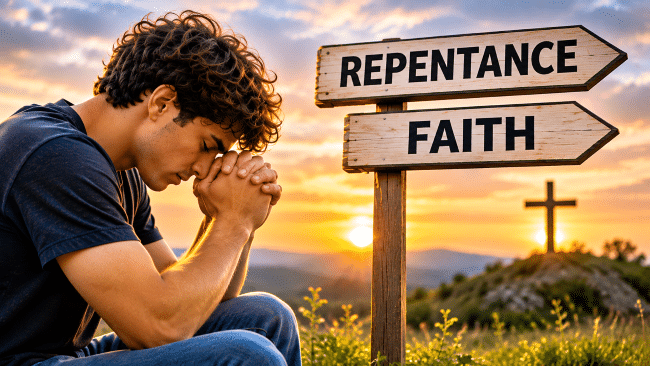
Repentance and faith belong together in the biblical response to the gospel. Repentance involves a change of mind and direction concerning sin and God, while faith means trusting Jesus Christ as Savior and Lord.
Jesus proclaimed in Mark 1:15 (KJV):
“The time is fulfilled, and the kingdom of God is at hand: repent ye, and believe the gospel.”
Notice that Jesus commanded both repentance and belief. Genuine repentance recognizes sin and turns toward God, while genuine faith depends upon Christ rather than personal righteousness.
Acts 20:21 (KJV) describes Paul’s message:
“Testifying both to the Jews, and also to the Greeks, repentance toward God, and faith toward our Lord Jesus Christ.”
Repentance is not a payment for salvation, and faith is not merely agreeing that Jesus existed. Both concern the heart’s response to the truth of the gospel.
A repentant believer does not become sinlessly perfect overnight. Instead, repentance establishes a changed attitude toward sin, and faith rests upon the finished work of Jesus Christ. Sexual Immorality: Truth, Repentance, and Hope — practical example of repentance
How Does Someone Become Born Again?
The Bible directs sinners to Jesus Christ, whose death and resurrection provide the foundation of salvation. Spiritual rebirth is God’s work, not a ceremony that human beings can manufacture.
Romans 10:9 (KJV) declares:
“That if thou shalt confess with thy mouth the Lord Jesus, and shalt believe in thine heart that God hath raised him from the dead, thou shalt be saved.”
Biblical faith acknowledges Jesus as Lord and trusts that God raised Him from the dead. Christ’s resurrection confirms His victory over death and the truth of His saving work.
John 1:12–13 teaches that those who receive Christ and believe on His name become children of God, born not by human will but by God.
Therefore, becoming born again involves receiving God’s salvation through faith in Jesus Christ, accompanied by repentance. The Holy Spirit brings about the new birth; human effort cannot produce it.
What Changes After Salvation?

Salvation establishes a new relationship with God and begins a lifelong process of spiritual growth. Believers still face temptation, but they now have a new identity and direction.
A New Identity in Christ Second Corinthians 5:17 (KJV) declares:
“Therefore if any man be in Christ, he is a new creature: old things are passed away; behold, all things are become new.”
Believers are no longer defined solely by their former sinful lives. Their new identity rests in Christ, not in past failures or personal achievements.
A New Relationship With Sin
Romans 6:12 instructs believers not to allow sin to reign in their mortal bodies. Salvation does not eliminate every temptation, but believers are called to resist sin rather than willingly surrender to it.
The Indwelling Holy Spirit
Romans 8:9 teaches that those who belong to Christ have His Spirit. The Holy Spirit guides, convicts, strengthens, and helps believers grow in obedience to God’s Word.
A Growing Desire for God’s Word How to Communicate With God in Daily Life — prayer and spiritual growth
First Peter 2:2 encourages believers to desire the sincere milk of the Word so they may grow spiritually. Regular Bible study helps Christians distinguish biblical truth from misleading teachings.
A New Direction in Life
Ephesians 2:10 describes believers as God’s workmanship, created in Christ Jesus unto good works. Good works do not purchase salvation; they are the proper fruit of a life transformed by grace.
These changes may develop gradually, but genuine spiritual rebirth produces a new relationship with God and a growing desire to follow Christ. My Identity, God’s Word from Scriptures on Identity in Christ — understanding your new identity
Does Being Born Again Mean You Will Never Sin Again?
No. The Bible distinguishes receiving new life from becoming completely free of sin in daily experience.
First John 1:8 (KJV) warns:
“If we say that we have no sin, we deceive ourselves, and the truth is not in us.”
Believers must continue confessing sin, resisting temptation, and growing in holiness. Spiritual maturity develops through dependence upon God, obedience to Scripture, and the Holy Spirit’s transforming work.
First John 1:9 assures believers that God is faithful and just to forgive confessed sins. This promise does not encourage careless living; it calls Christians to honesty, repentance, and renewed fellowship with God.
Is Water Baptism the Same as Being Born Again?

Water baptism: Young believers celebrating baptism.
Water baptism is an important act of obedience that publicly identifies believers with Jesus Christ. However, baptism should not be confused with the Holy Spirit’s work of regeneration.
In Acts 10:44–48, The Holy Ghost came upon Cornelius’s household before Peter told them to be baptized. This shows that God’s saving work doesn’t depend solely on the physical act of entering water.
Baptism visibly expresses identification with Christ, while spiritual rebirth is accomplished by God. Believers should obey Christ’s command concerning baptism without treating the ceremony as a substitute for genuine faith.
How Can You Know Whether You Are Born Again?
Assurance of salvation must rest upon God’s promises rather than changing emotions. First John 5:13 explains that Scripture was written so believers in the Son of God may know they have eternal life.
Examine whether your faith rests upon Jesus Christ, whether you recognize sin as wrong, and whether you desire to obey God’s Word. These are meaningful evidences of spiritual life, but they are not achievements that earn salvation.
A Berean mindset, as demonstrated in Acts 17:11, means examining Scripture carefully instead of accepting religious claims without verification.
What Is Exegesis? — explains how to interpret God’s Word faithfully and avoid misleading teachings.
Conclusion: A New Beginning Through Jesus Christ
Being born again means receiving new spiritual life from God through Jesus Christ. Repentance and faith belong together in responding to the gospel, while the Holy Spirit accomplishes regeneration and begins transforming the believer.
People cannot earn salvation through good works, religious membership, or personal effort. God freely gives it to those who trust in Jesus, the crucified and risen Savior.
True spiritual peace begins with reconciliation to God through Jesus Christ. How to Commit to God Fully: Teen Faith Guide — continuing in discipleship. Be Born-Again. Shalom Restores What Is Broken.
Shalom is a Blessing, a manifestation of Divine Grace.
Call or Text Someone Today and Tell Them You Love Them
The more of Jesus you place into your heart the more darkness is pushed out.

Disclosure: This page may contain affiliate links. This means at no additional cost to you. we may receive a commission if you purchase a product from one of our links. We only recommend products we trust. Disclaimer
Contact Us